
One ERP, fitted to your industry
The Opernix core is the same for every customer. Add-ons and industry packs add the features, terminology and reports your line of business needs, without a separate system.
Distributors, wholesalers and service companies
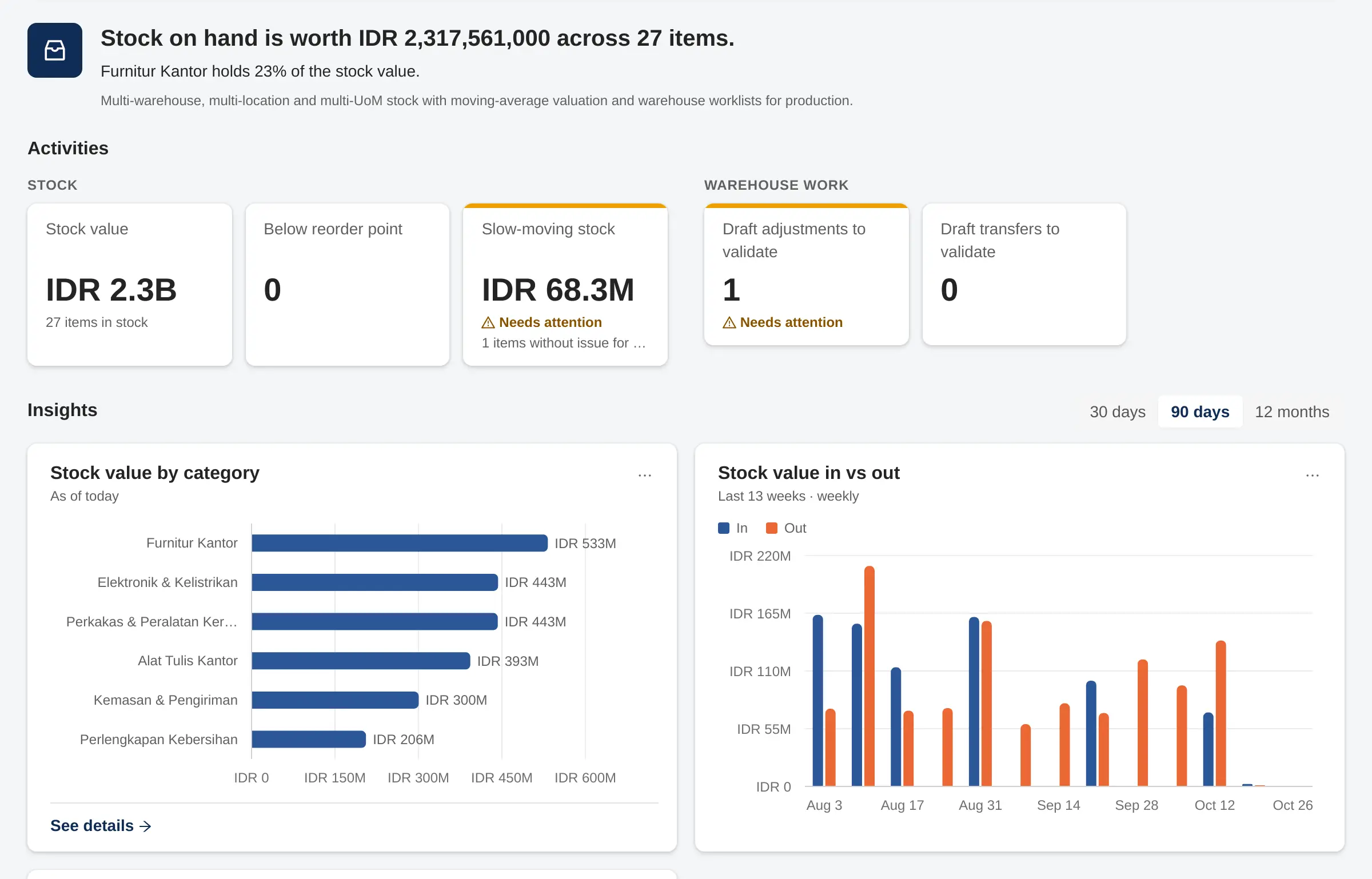
In trading, margin comes down to the right price, accurate stock and receivables that actually get collected. Opernix keeps all three in one flow.
Challenges we often see
- Customer-specific prices kept in spreadsheets
- Stock out of sync between warehouses
- Bad debts discovered only at month-end
What Opernix provides
- Price lists, customer item codes and price control with approval
- Stock per warehouse and location, two-step transfers, consignment
- Credit limits, credit holds, collection lists and payment reminders
- Landed costs added to the value of imported goods
- Down payments, billing terms and credit notes with automatic journals
Typical plan: Dagang (Trading)
Discrete manufacturing and assembly, including plastics & packaging
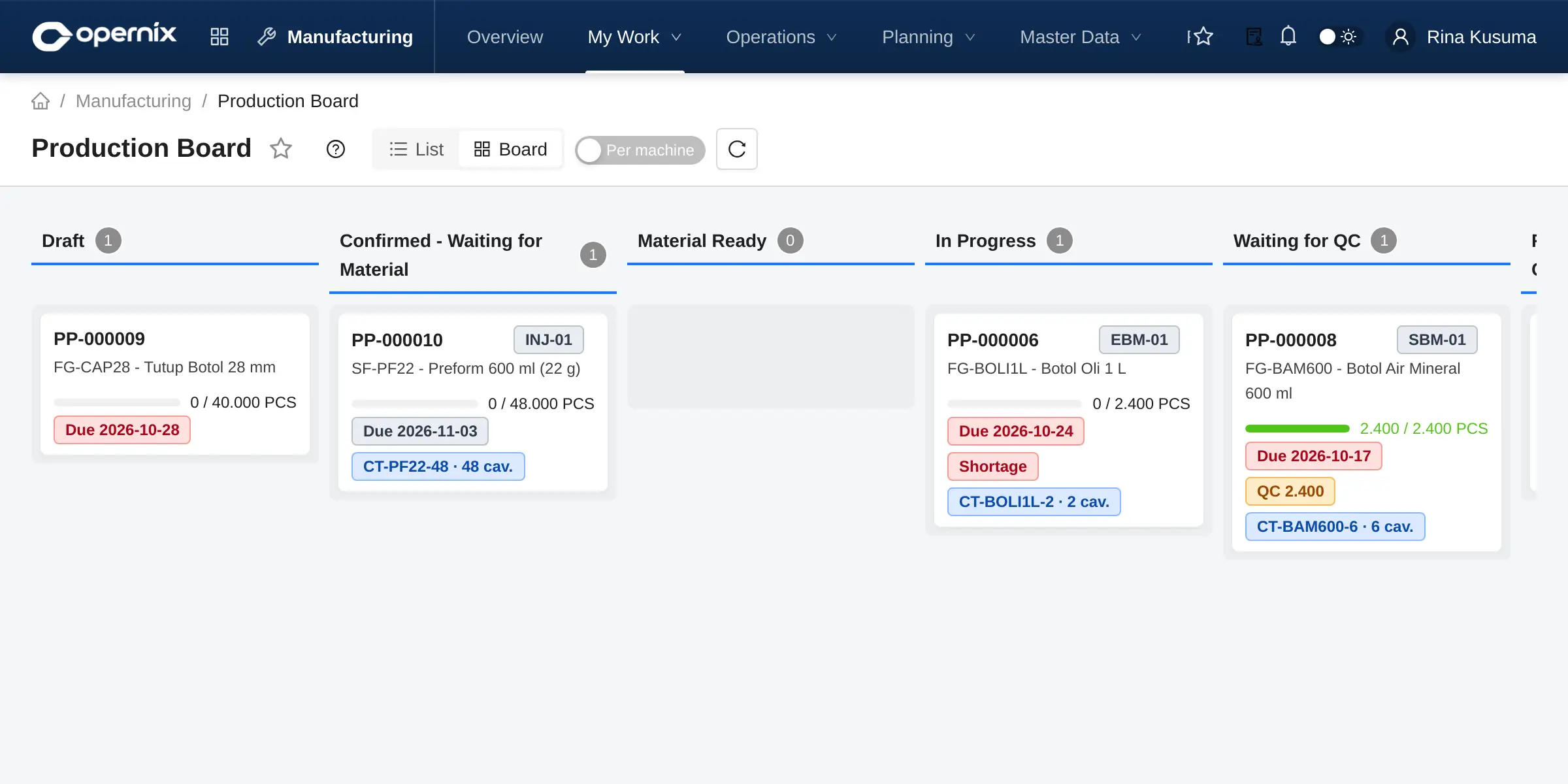
From resin in kilograms to finished goods in pieces: Opernix records materials, machines, moulds, shifts and rejects, then calculates the actual cost of every production order.
Challenges we often see
- Production plans and material purchasing planned separately
- Output and rejects per shift recorded on paper
- Cost of production is only an estimate
What Opernix provides
- Multi-level BoMs, routings, MRP and a work calendar
- Shift production reports per machine, with rejects, downtime and regrind
- Production board and shop-floor monitor
- Actual costs through work in progress, variance analysis and cost close
- Quality control (IQC, IPQC, FQC) and maintenance of machines and moulds
- Plastics & Packaging and Automotive Stamping industry packs
Typical plan: Manufaktur (Manufacturing), or Industri (Industrial) with a large workforce
Developers of landed housing, shophouses and apartments
A property project combines marketing, mortgages, construction and final tax at once. The Property Developer pack connects all of it to the general ledger.
Challenges we often see
- Unit status scattered across teams
- Instalment and mortgage schedules tracked by hand
- Revenue recognition and final tax calculated separately
What Opernix provides
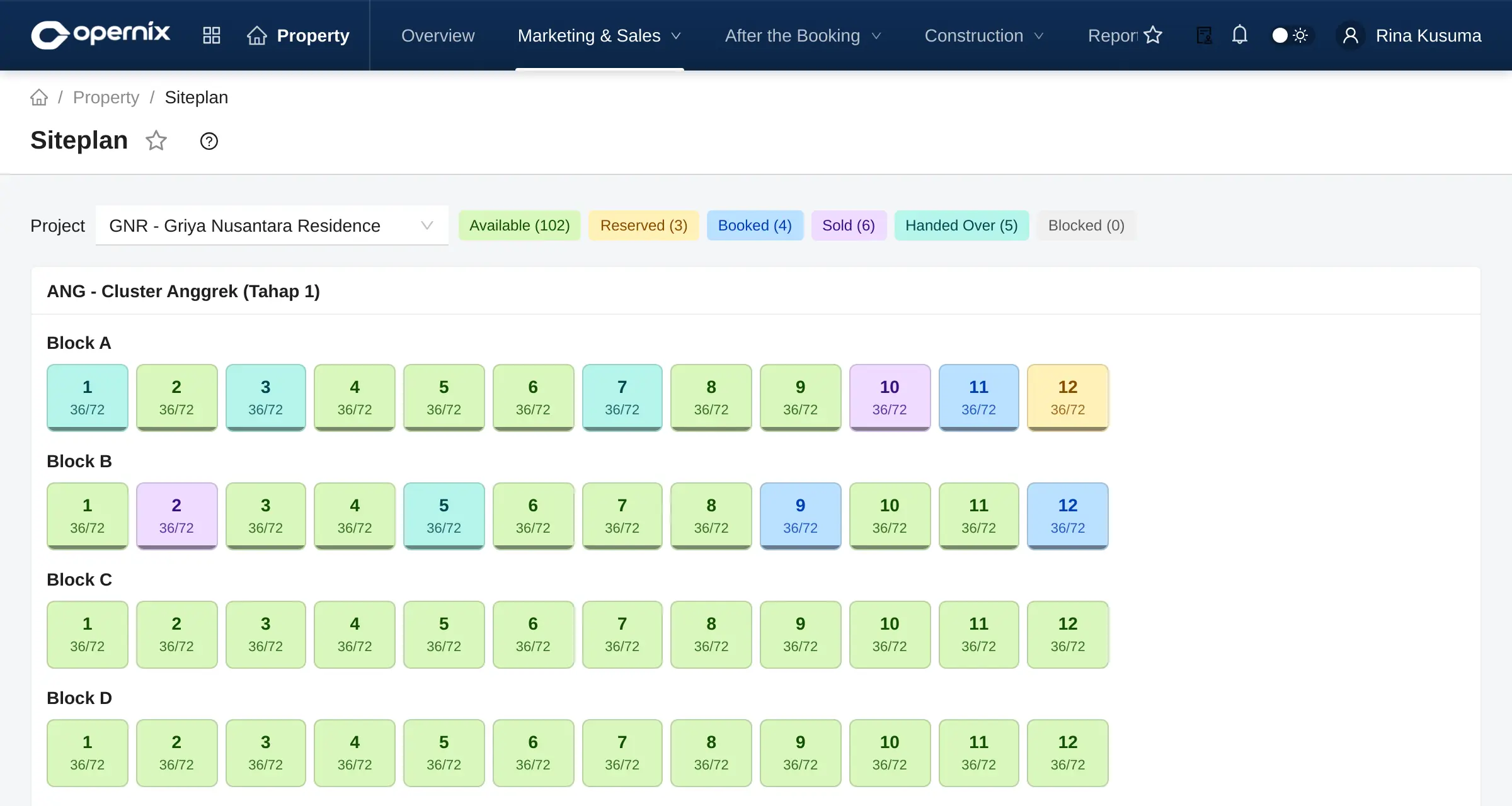
- Units, clusters and a site plan with the status of every unit
- Reservations, booking agreements (SPR) and payment schedules: cash, instalments, staged mortgage (KPR)
- Late-payment fees calculated automatically
- Handover (BAST) with revenue and cost-of-sales recognition
- Final tax (PPh Final), agent commissions, after-sales complaints and estate fees (IPL)
- Construction budgets and contractor work orders per unit through the Projects module
Typical plan: Dagang (Trading) + Property Developer add-on
Contractors, EPC and capex projects
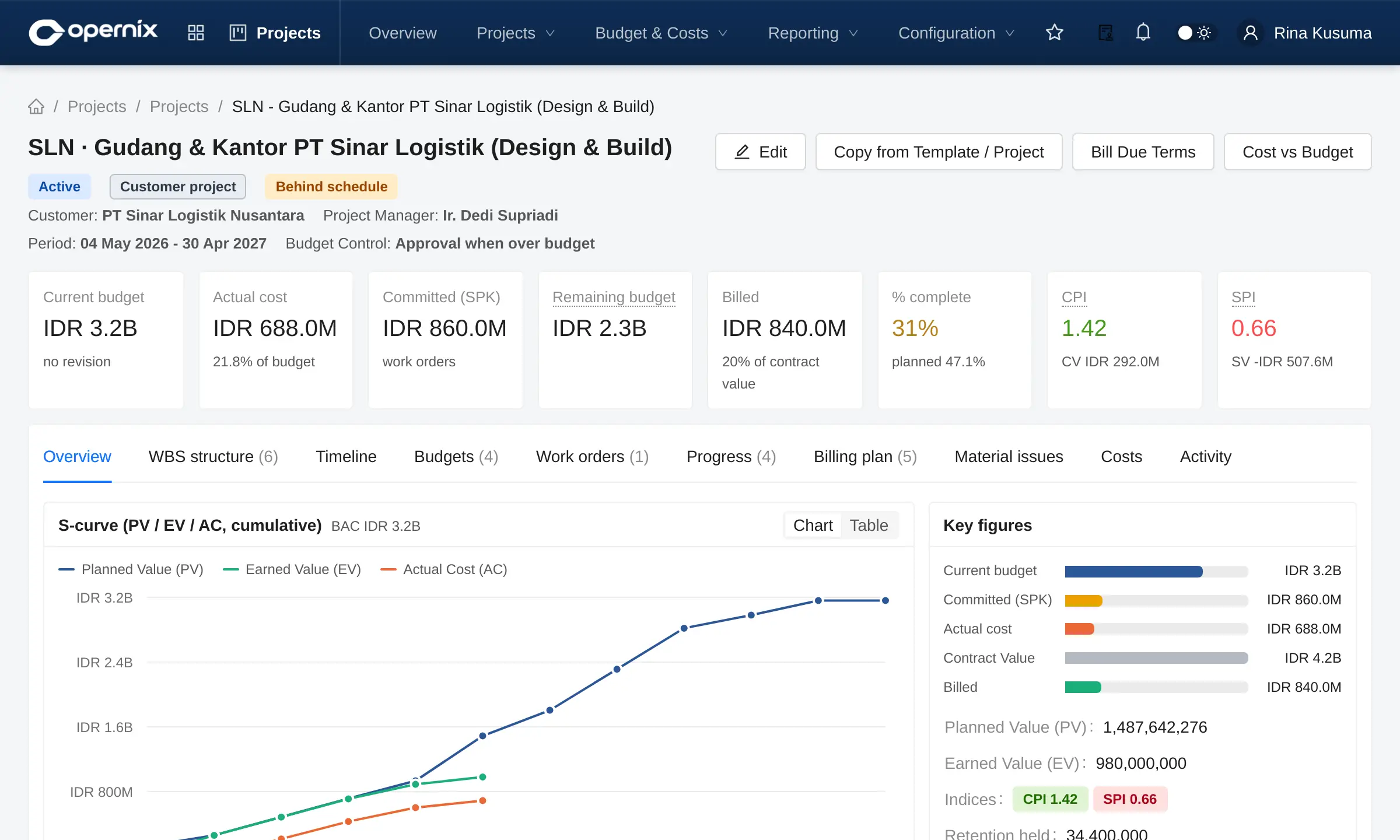
A project budget is only useful when actual costs land on the same elements. The Projects module controls budgets, subcontractors and billing from a single project card.
Challenges we often see
- Actual costs visible only after the project ends
- Subcontractor progress and retention tracked separately
- Milestone billing goes out late
What Opernix provides
- WBS and budgets (RAB) with versions and revisions
- Budget control when work orders and POs are confirmed
- Subcontract work orders (SPK), progress certificates and retention
- Milestone billing to customer invoices
- S-curve, earned value (CPI, SPI) and budget vs actual
Typical plan: Dagang (Trading) + Projects add-on
Is your industry not listed?
Tell us about your processes. We will tell you honestly which parts are supported today and which are not.